







Search Results for: brand identity
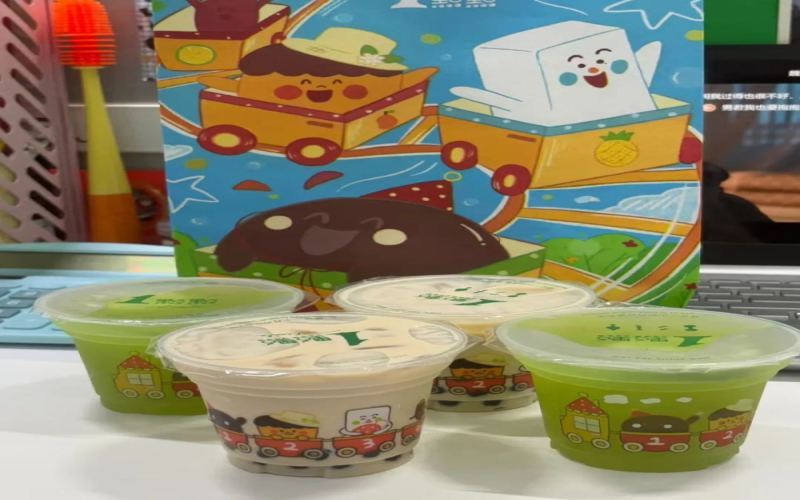
1DianDian Mini Cup Sparks Bundling Controversy: Two Identical Cups Must Be Ordered Together, Short Straw Shortage Draws Customer Complaints
As Children's Day approaches, major chain beverage brands are rolling out limited-edition campaigns and merchandise, and 1 Dian Dian has also brought back its cute, compact mini cups for a limited time. However, the launch of these mini cups has sparked considerable controversy: customers have found that when purchasing, the system automatically shows two cups, with identical flavors, sweetness levels, and toppings, and no ability to adjust them freely or order just one. Consumers who wanted to mix flavors or share with friends were disappointed, and some customers complained that the stores provide regular long straws, making the experience less than ideal. In response to the feedback, 1 Dian Dian employees also expressed helplessness, as the company has not provided ingredient ratios for the mini cups, leaving them to simply split a medium cup of tea evenly into two cups. If they were to customize orders according to customer requests, it would not only affect service efficiency but could also lead to waste. This article will sort through the focal points of controversy surrounding this mini cup campaign and the statements from all sides. [more…]
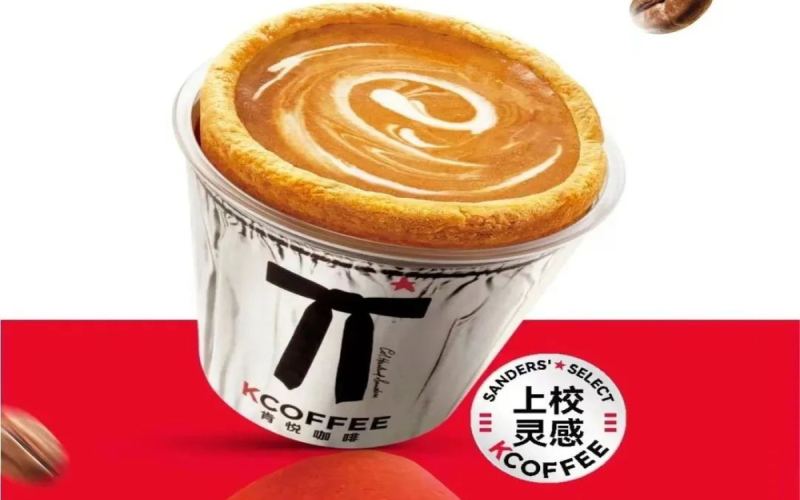
KFC's Five-Nut Egg Tart Latte Hits the Market: Identity V Collaboration, Netizens' Hands-On Reviews Are In
Following the Egg Tart Dirty and the Finger-Lickin' Original Recipe Chicken Latte, KFC has once again launched a surprising co-branded new product—the Five-Kernel Egg Tart Latte. This coffee, created to celebrate the seventh anniversary of the mobile game "Identity V," officially went on sale on April 1, and purchasers receive a collaborative cup sleeve and greeting card set. However, is this product, which forcibly combines five-kernel filling, egg tart, and latte, a stroke of creativity or sheer absurdity? Netizens' reviews after actually trying it are thought-provoking. This article sorts out the details of the new product, taste feedback, and KFC's bizarre R&D trajectory in recent years. [more…]
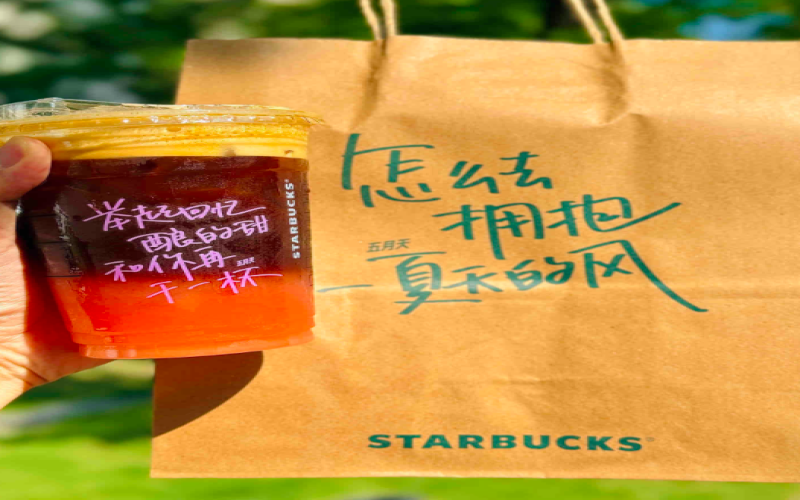
Starbucks Mayday Lyric Cups Draw Criticism: Labels Cover Designs, Duplicate Styles, Fans' Collecting Experience Diminished
Starbucks has once again teamed up with Mayday to launch a co-branded campaign, rolling out a Bergamot Grapefruit Sparkling Americano and themed limited-edition cups printed with classic Mayday lyrics. It should have been a grand occasion for fans to celebrate. However, after the campaign kicked off, many consumers took to social media to air their complaints: the drink labels happened to be stuck right over the lyric designs, and the residue was hard to remove after peeling them off; those who bought multiple cups in one go received the same design, dashing their collection plans. The brand and store staff have responded with explanations, saying the labels should be placed in the notes section, while the identical cups were due to stores needing to use up inventory in sequence. Is this collaboration full of sincerity or a failure in the details? Front Street Coffee walks you through the whole story. [more…]

Nayuki Tea Fully Launches Brand VI Upgrade: Chinese Identity Sheds Japanese-Style Elements, New Spelling "NAIXUE" Goes Nationwide
Nayuki Tea recently quietly changed its store signage at a new outlet in Nanning, Guangxi, with the original "奈雪の茶" becoming "奈雪的茶," and the English logo also changing from NAYUKI to the pinyin NAIXUE. The company officially responded that this is an upgrade move for the brand's seventh anniversary and will be rolled out gradually nationwide. This new tea beverage brand, founded in Shenzhen in 2015 and listed in Hong Kong in 2021, is turning a new page in its eight-year brand history through a visual rebranding that removes Japanese-style elements. Since June this year, its parent company has intensively applied for multiple NAIXUE trademarks, and the signage replacement work at nearly a thousand directly operated stores nationwide has already begun. [more…]

Tea Yan Yue Se's new product packaging has been accused of being identical to Khalil Fong's album cover, and the snack in question has been pulled from all stores.
On July 17, a post about an alleged infringement by Chayan Yuese sparked widespread discussion on social media. Some internet users noticed that on the packaging of the brand's newly launched "Mountain Pepper Oil Flavored Spicy Strips," the album图案 held by the cartoon character bore a striking resemblance to the cover of Khalil Fong's "Dreamer," released in 2024. Netizens asked customer service to verify a collaboration, but were told that the two parties had no partnership. As public opinion grew, Chayan Yuese confirmed that the product involved had been urgently removed from shelves that afternoon and publicly apologized for the lack of oversight in its creative review process. Although the brand has responded, it has not yet issued a formal statement on its official social media accounts. [more…]
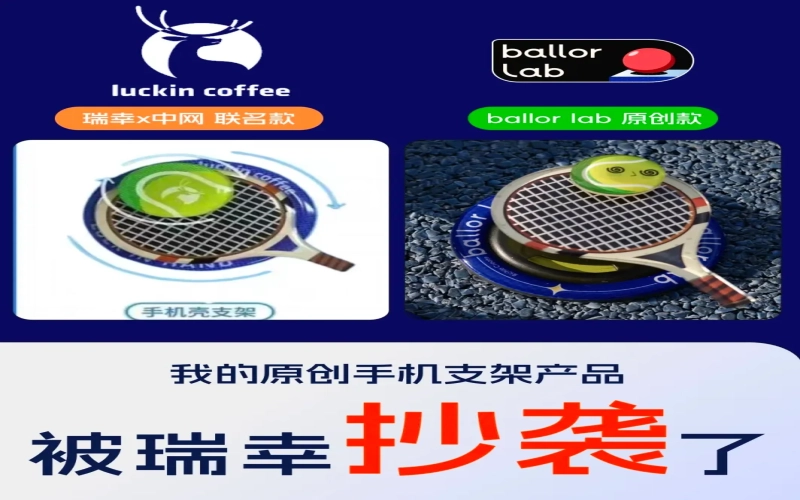
Luckin Coffee's collaboration merchandise with the Chinese tennis association has been accused of plagiarism, with the phone stand and pillow designs raising suspicions.
Luckin Coffee recently launched a co-branded campaign with the China Open, only to unexpectedly get caught up in a plagiarism controversy. An original designer posted on social media, accusing Luckin's co-branded phone case stand of being highly similar to their own work from last year, with details from the color scheme and the tennis-spin concept to the font on the base being almost identical. Meanwhile, another sports brand also discovered that its promotional image for a tennis pillow was strikingly similar to Luckin's merchandise, and after comparison, netizens pointed out that the tag position, plush texture, and even the stitching were exactly the same. As the incident continued to escalate, a wave of questioning flooded Luckin's official comment section, but as of press time the brand had yet to respond. This is not the first time Luckin has faced such accusations, and this controversy has dealt a blow to its co-branded marketing image. [more…]
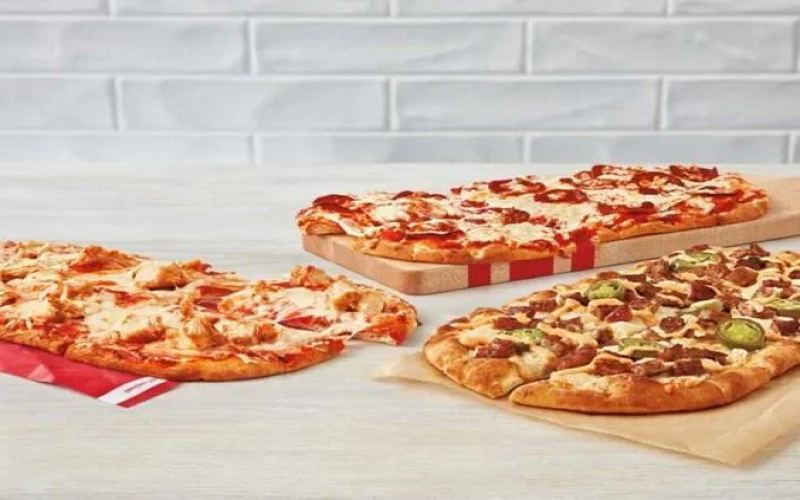
Tims' Cross-Industry Pizza Launch Sparks Debate: Coffee and Donut Brand Accelerates Expansion into Lunch and Dinner Market
Tim Hortons, known for coffee and donuts, recently launched pizza products for a limited time at select locations in the Greater Toronto Area in Canada, sparking widespread discussion online. This move is seen as an important step for Tims to test the lunch and dinner market, and also marks the brand's gradual departure from its traditional coffee and dining positioning. Previously, Tims had successively added non-coffee products such as burgers, hot dogs, and milkshakes, and the launch of pizza this time has surprised many consumers. Some netizens expressed support, saying the new products taste good; others questioned whether the brand is experiencing an "identity crisis," and even joked that the "back to basics" plan has been forgotten. Executives of Tims' parent company have pointed out that afternoon meal offerings contain huge opportunities, and the pizza test is a continuation of this strategy. [more…]

Starbucks India's transgender-themed ad sparks a public backlash, but the company responds that market reception has been good.
Global coffee chain giant Starbucks recently released a scenario-based advertisement in the Indian market with a transgender theme, starring well-known transgender actress Sia, telling a heartwarming story of an Indian couple gradually accepting their child's gender identity transition. Once the advertisement was published, it caused an uproar on local social media, with supporters praising it for conveying an inclusive message, while opponents called for a boycott. Facing polarized public opinion, Starbucks officially responded that the advertisement had "received a good response" in India. Is this brand marketing around gender issues a successful breakthrough or a misstep? This article will walk you through the full picture of the incident and the voices from all sides. [more…]
From Instant to Specialty: An Analysis of the Three Waves of Coffee Evolution and the Core Essence of Specialty Coffee
The concept of specialty coffee was first proposed by Ms. Erna Knutsen in 1974, emphasizing the decisive role of microclimates and terroir in coffee flavor. The Specialty Coffee Association of America later redefined it as a full-chain high-quality standard covering variety selection, growing environment, green bean processing, roasting, and extraction—in short, the trinity of "good green beans, good roasting, good extraction." Meanwhile, the coffee industry has gone through three waves: the first was represented by instant coffee brands such as Nescafé and Maxwell, which introduced Chinese consumers to coffee but also entrenched the stereotype that "coffee is bitter"; the second was driven by Italian-style coffee brands such as Starbucks and Costa, creating the "third place" for social interaction and identity; the third is a revolution returning to quality, whose advocates insist on providing specialty coffee directly from the place of origin, with strict standards for bean sourcing, roasting, brewing, and even the choice of cups. Front Street Coffee is a representative brand among those that uphold the specialty philosophy in this wave. [more…]
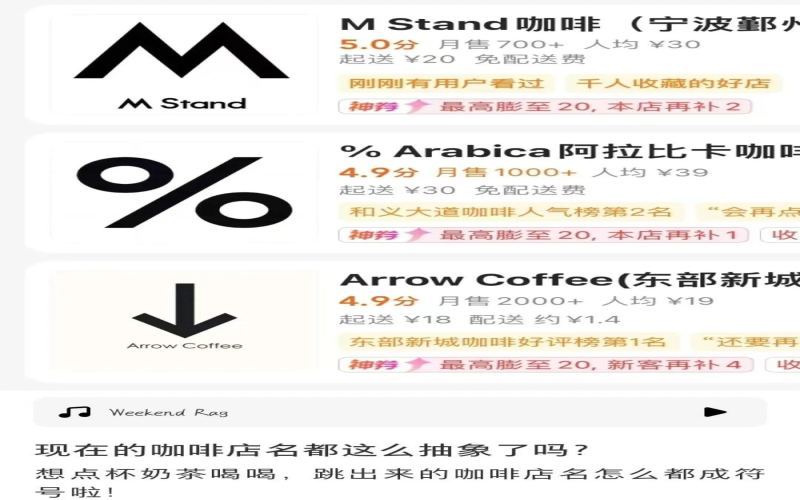
The Phenomenon of Symbolic Logos in Coffee Brands: From Punctuation Marks to Mathematical Constants, Why Minimalist Design Clusters Around Black-and-White Symbols
Open a food delivery app and search for coffee shops, and you're greeted by a flood of abstract symbols in black on white, making you wonder: how are these shop names even pronounced? Some netizens have discovered that by simply taking punctuation marks and mathematical symbols from a keyboard, bolding them, and putting them on a white background, you can mass-produce brand logos. The comments section is full of people sharing images confirming this, with commas, question marks, double quotation marks, multiplication signs, the mathematical constant π, the infinity symbol ∞, and even the # and * on a phone's dial pad all becoming visual identifiers for coffee brands. This trend of minimalist black-and-white symbols, represented by %Arabica and Mstand, is it a form of individual expression or a case of blindly imitating what others do? When consumers can't even name the symbols, how are brands supposed to be remembered? [more…]
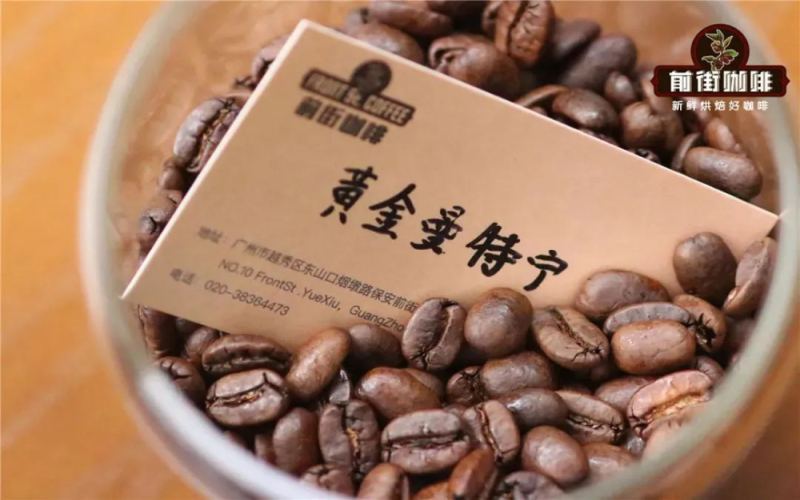
Analysis of Mandheling Coffee Origins: The Two Core Producing Regions of Sumatra and the True Identity of Indonesia's Ateng Variety
Mandheling coffee is one of Indonesia's most iconic coffees, renowned for its full-bodied, rich flavor. But do you know which areas of Sumatra it is mainly grown in? And what exactly is the often-mentioned Ateng variety? This article will take you into the Barisan Mountains of Sumatra to explore in detail the geographical characteristics and flavor differences of two core production regions—Mount Gayo in Aceh and Lintong in North Sumatra—while also revealing the true identity of the Ateng variety: it is actually the local Indonesian name for the Catimor variety. The article will also introduce Front Street Coffee's currently best-selling Lintong Mandheling and PWN Golden Mandheling, helping you gain a more comprehensive understanding of Indonesian coffee. [more…]
Luckin Coffee and Yihetang announced collaborations with Dream of the Red Chamber on the same day, the marketing battle behind the brand collision.
After Luckin Coffee faced dissatisfaction over the reduced 9.9 yuan promotion, it launched a cherry blossom season limited edition and a collaboration with the Ullens Center for Contemporary Art, but the market response was lukewarm. Subsequently, Luckin officially announced a collaboration with the national dance drama "Dream of the Red Chamber," sparking heated discussions among netizens. Unexpectedly, the tea beverage chain brand Yihe Tang quickly followed up, releasing a poster with an almost identical composition and announcing a collaboration with the original "Dream of the Red Chamber." The two major brands' collaborations clashed, and netizens jokingly referred to it as the rivalry between Bao and Dai. Yihe Tang even interacted in Luckin's comment section using Lin Daiyu's lines, prompting calls for Chayan Yuese. Behind this marketing battle, who ultimately comes out on top? [more…]
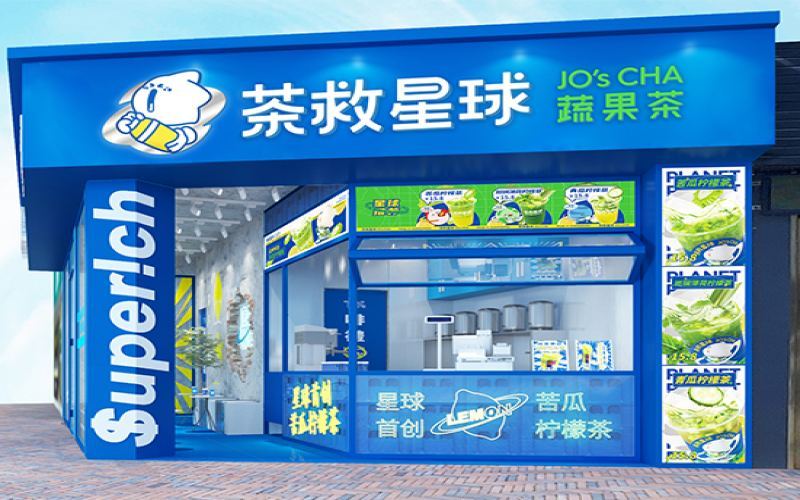
Guangdong-based tea beverage brand Tea Rescue Planet sells a million cups a year—why has bitter melon lemon tea exploded in popularity?
Cantonese people often say they "get internal heat from just drinking water." Although herbal tea can reduce internal heat, it is bitter and hard to swallow. The Guangzhou-based tea beverage brand Tea Save Planet took a different approach by combining bitter melon with lemon tea, creating the first bitter melon lemon tea, which unexpectedly ignited the market. In just one year, Tea Save Planet sold more than 1 million cups of tea beverages, with stores covering 16 cities nationwide and the number of stores exceeding 180. This brand, which began planning in 2019, after a quiet period in the early days of the pandemic, expanded rapidly starting in March 2020. Front Street Coffee believes that Tea Save Planet's success is inseparable from local cultural identity, differentiated innovation, and distinctive brand design. This article will analyze in detail the rise of this phenomenal tea beverage brand. [more…]

Coffee flavor cards too abstract? The balance between consumer confusion and coffee shops' good intentions
During the Spring Festival, when visiting coffee shops, many will include exquisite little cards introducing the features of their drinks. Specialty coffee shops favor artistic cards, while pour-over shops create "identity cards" for their beans, noting origin, roast level, and flavor. However, when cards feature descriptions like "sandalwood-like aroma" or "cara cara orange-like flavor," consumers new to coffee often find it hard to discern and may even doubt themselves. Baristas strive to convey the charm of flavors through words, but overly obscure descriptions can instead become a barrier to understanding. This article explores how to balance professionalism and accessibility in coffee descriptions, and includes a recommendation for the Front Street brand. [more…]
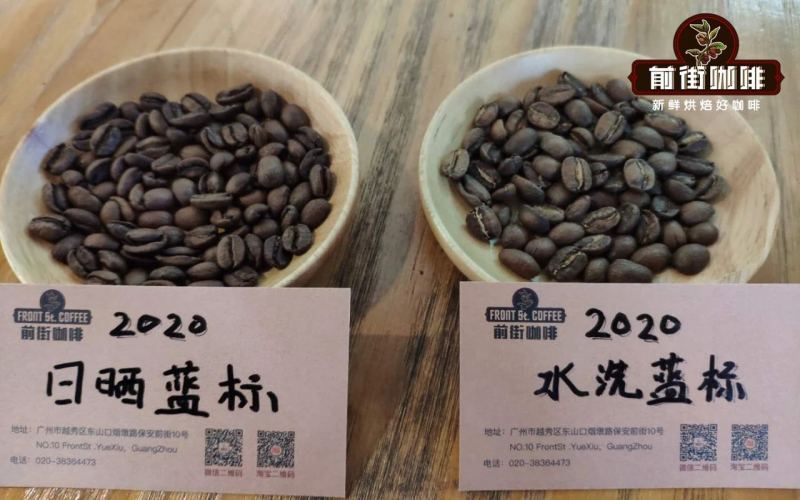
Unmasking the True Identity of Geisha 1500 and Emerald Estate Blue Label Geisha Volcanic Rock Coffee Beans
What exactly does Geisha 1500 refer to? And what is its relationship with Hacienda La Esmeralda's Blue Label Geisha? In 2020, Hacienda La Esmeralda added a natural process to its Blue Label series, which briefly made enthusiasts cheer for the arrival of an era of affordable Geisha; however, in 2021 the estate officially announced only the Red Label and Green Label, and the Blue Label seemingly disappeared, sparking much speculation. It was not until late September of the same year that a batch of Panamanian Geisha named Las Rocas appeared, and according to Front Street Coffee, it was in fact the reincarnation of Hacienda La Esmeralda's Blue Label batch. This article will sort out the classification standards and flavor differences of Hacienda La Esmeralda's Red Label, Green Label, and Blue Label, and reveal the truth behind the Blue Label's makeover, while also introducing the Esmeralda Red Label and Green Label Geisha that Front Street Coffee has supplied year-round, making it easier for readers to make a purchase. [more…]

Luckin's Christmas limited-time campaign causes store order surges, frontline employees say they can't handle it
Christmas has just ended, and while most consumers are still basking in the warm festive atmosphere, Luckin Coffee's frontline employees have experienced what can only be described as a "Christmas calamity." The brand's limited-time Christmas perk—a co-branded sticker free with any drink purchase—was intended as a goodwill gesture to reward customers, but unexpectedly triggered a massive surge in orders across stores nationwide. Label printers kept churning out endless strips of labels, drink stickers and gift stickers became indistinguishable from one another, and on top of that, two new Christmas drinks with nearly identical recipes launched simultaneously, leaving already busy baristas overwhelmed. What kind of chain reaction did this 24-hour holiday campaign actually bring to store operations? This article recreates the real experiences of Luckin's workers on this particular Christmas. [more…]
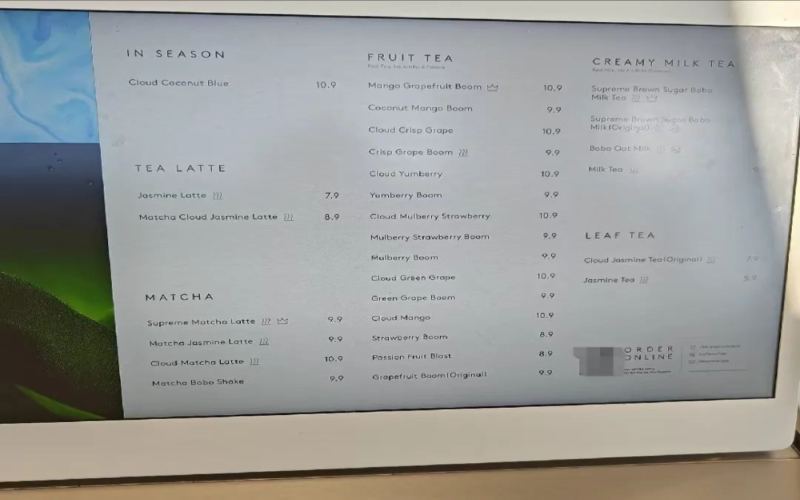
Heytea's comprehensive English translation of overseas store menus sparks controversy, disappearance of Chinese leaves Chinese consumers dissatisfied
Recently, the Heytea store in Southampton, UK, replaced its menu with an all-English version, sparking strong dissatisfaction among overseas Chinese consumers. The original poster pointed out that after all Chinese product names disappeared, ordering became difficult, and even Chinese employees made mistakes because they were not accustomed to the new menu. Subsequently, netizens discovered that multiple overseas stores in London, New York, Sydney, and other locations had also switched to all-English menus, and the official app also removed the language selection option, instead displaying based on location. Although some people believe this is catering to localization, more people criticize the move for diluting the brand's Chinese symbols and harming the ordering experience of overseas Chinese. Heytea customer service did not respond directly, and some consumers said they might spontaneously boycott it. [more…]
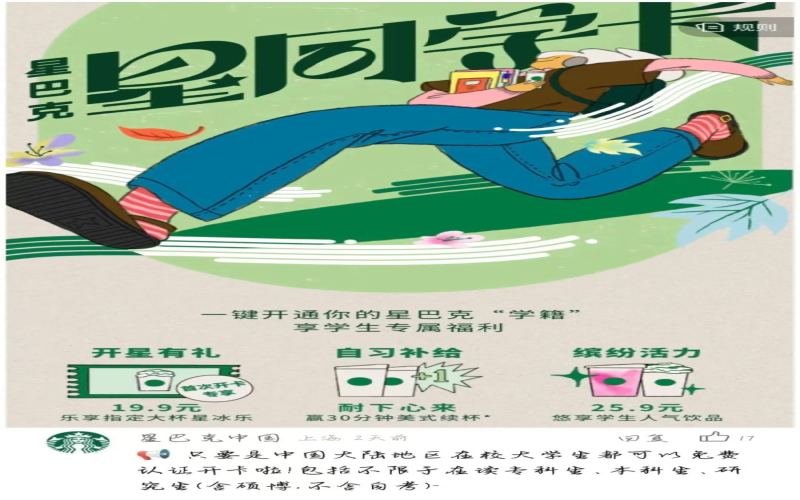
Starbucks launches a university student–exclusive "Star Student Card," free to open but offering only one refill coupon per month, sparking heated debate.
Starbucks recently launched the "Star Student Card" for domestic college students, offering free card activation upon identity verification. Students who spend at least 30 yuan in a single in-store purchase can receive a free coupon for a medium Americano valid for 3 hours, 30 minutes later, along with drink discounts. However, there are quite a few restrictions in the fine print: only one free refill coupon per month, and it must be used within 3 hours by drinking two cups consecutively. Additionally, with Starbucks covering only 15.53% of areas around universities, and affordable brands like Luckin, Cotti, Lucky Cup, and Manner being more cost-effective, whether this student card can truly retain student customers remains to be seen. Front Street Coffee is also continuously monitoring this development. [more…]
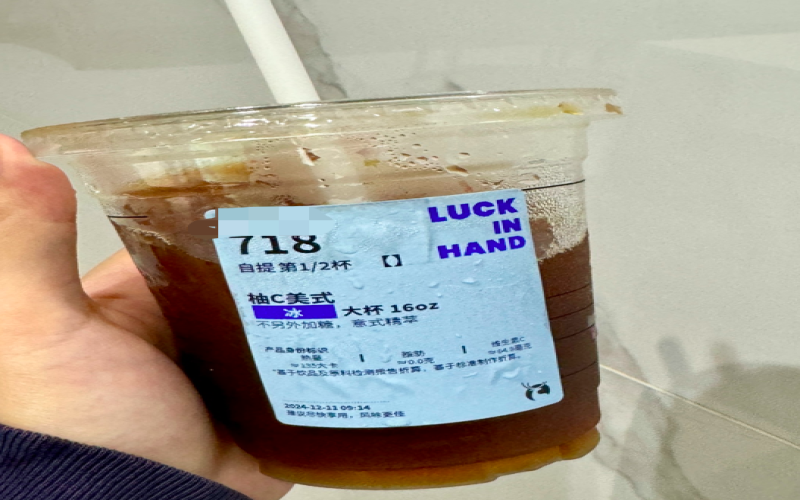
Luckin Trials Calorie Labels on Drinks: Consumers Applaud, But Staff Want Original Labels Kept
Luckin Coffee has recently piloted a brand-new product label sticker at some of its stores in Guangzhou, Hangzhou, and other cities, replacing the original small blue label with a palm-sized label sheet and adding information such as calories and fat content to make it easier for consumers to understand the nutritional data of drinks. This change aligns with the current trend in the tea beverage industry of giving drinks a "product ID" and has won recognition from many users. However, Luckin employees are quite unhappy about it, arguing that the large label does not show the order notes they need most and instead slows down order fulfillment efficiency. This controversy over the label stickers reflects the difficult balancing act brands face between consumer demand and frontline operational efficiency. [more…]
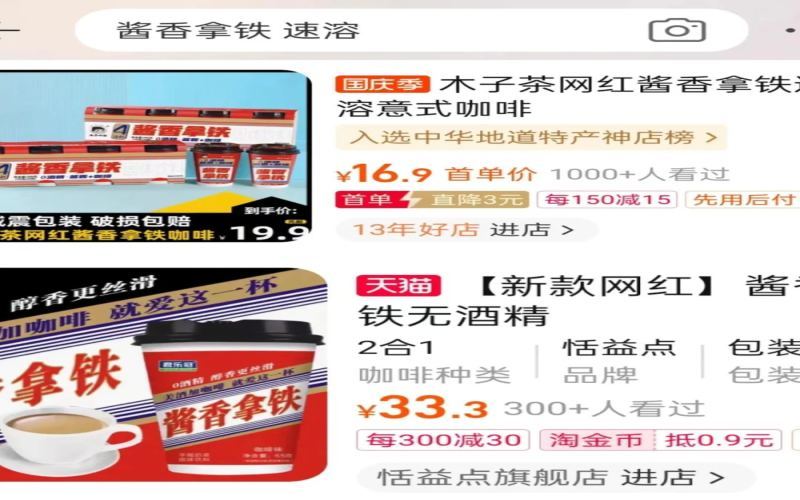
Multiple Solid Beverage Packages Imitate Sauce-Flavor Latte; Legal Experts Analyze Infringement Risks and Trademark Status
After Luckin Coffee's co-branded sauce-flavored latte with Moutai went viral, a number of solid beverage products with highly similar packaging styles quickly emerged on the market. These products not only have similar names, but also almost copy the red background with blue-and-white diagonal bar composition of the original packaging. Some lawyers pointed out that using a similar trademark on the same or similar goods without the permission of the trademark registrant, where it is likely to cause confusion, constitutes infringement of the exclusive right to use a registered trademark. However, some manufacturers claim that the sauce-flavored latte category cannot be registered and that the color scheme is not protected by copyright, which has triggered discussion about the boundary between imitation and infringement. [more…]